
Next-Generation CT Reconstruction Software
Unprecedented quality even on challenging data with the novel physically-based reconstruction software from Voxray.
Minimal artifacts
Automatic geometry correction
Arbitrary trajectories


What our customers say
Minimal artifacts, even in composites
Minimal artifacts
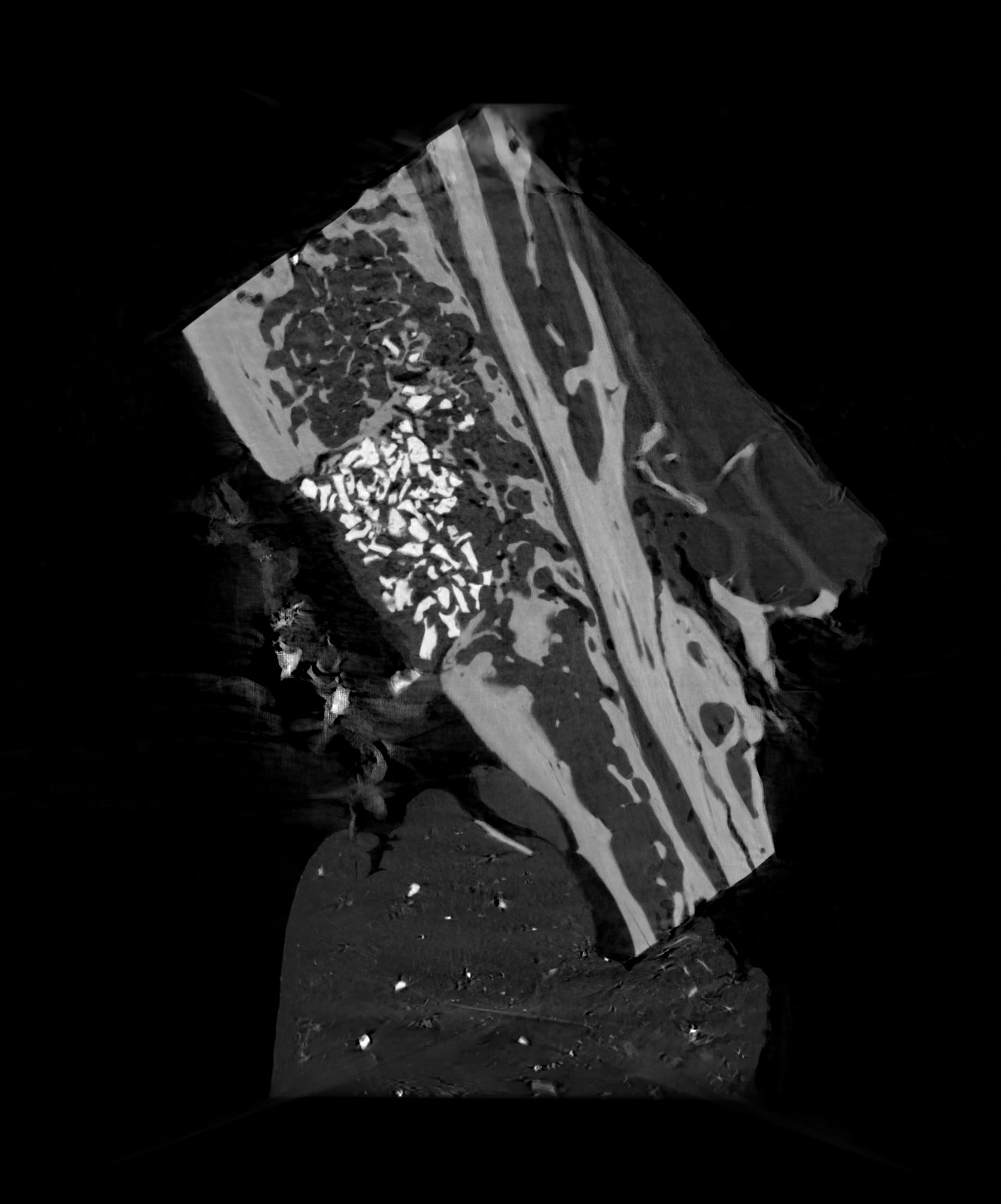
Beam hardening and metal artifacts are almost nonexistent due to Voxray's physically-based reconstruction algorithm.
Beam hardening and metal artifacts are almost nonexistent due to Voxray's physically-based reconstruction algorithm.
Exceptional results out of the box
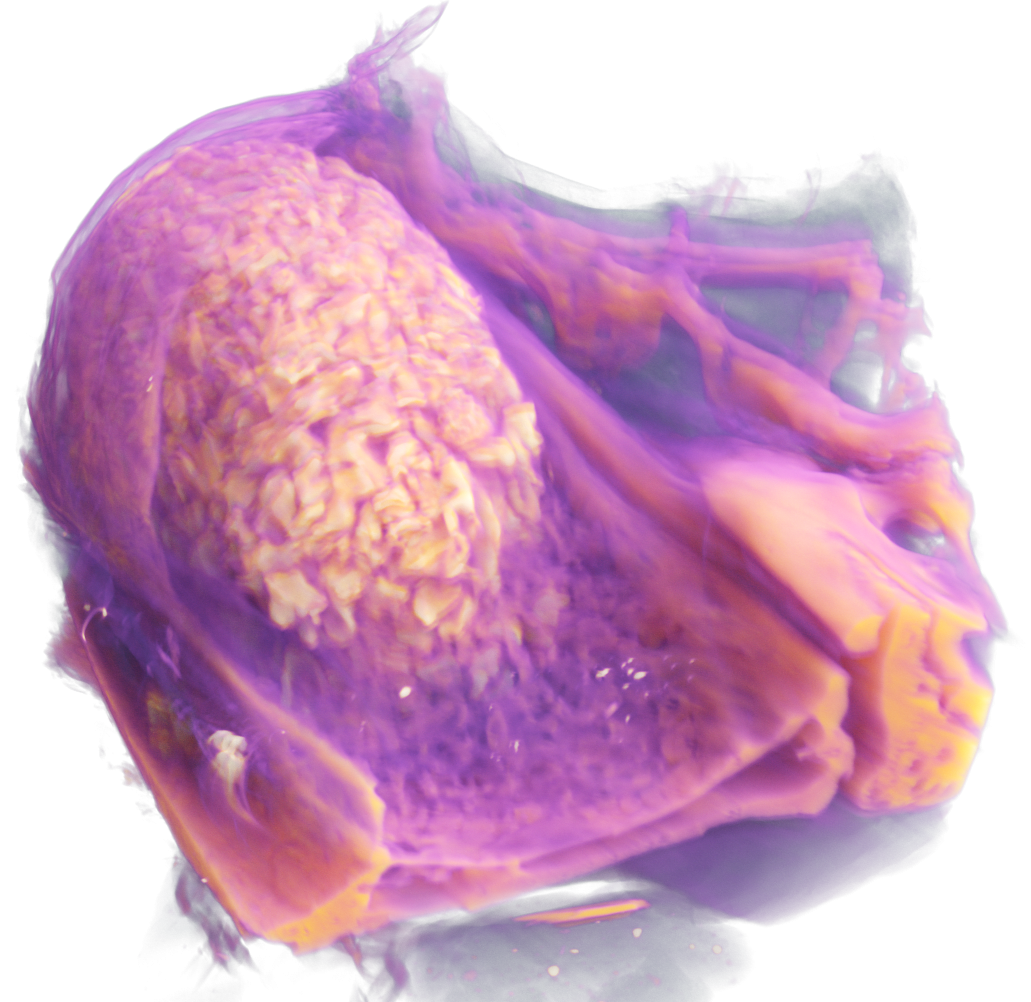
Even without manual parameter tweaking the Voxray software delivers exceptional results across nearly all datasets.
Even without manual parameter tweaking the Voxray software delivers exceptional results across nearly all datasets.
Find more defects in composite parts
Identify defects that would have been previously overshadowed by artifacts, especially in low-density materials next to high-density areas.
Identify defects that would have been previously overshadowed by artifacts, especially in low-density materials next to high-density areas.
Increased quality with automatic geometry correction
Per-projection geometry correction
For each projection, the geometric error (mechanical tolerances, focal spot drift,...) is automatically corrected during the reconstruction.
For each projection, the geometric error (mechanical tolerances, focal spot drift,...) is automatically corrected during the reconstruction.
Increased image sharpness
Because of sub-pixel alignment, the image sharpness is improved even for well calibrated lab-CT systems.
Because of sub-pixel alignment, the image sharpness is improved even for well calibrated lab-CT systems.
No ghosting artifacts
Ghosting artifacts disappear as the Voxray software corrects for geometric errors.
Ghosting artifacts disappear as the Voxray software corrects for geometric errors.



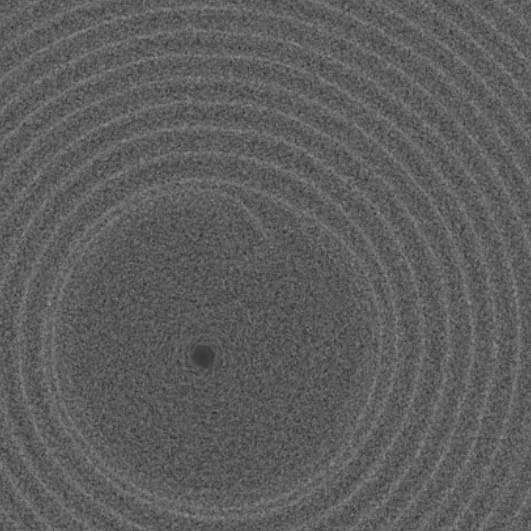
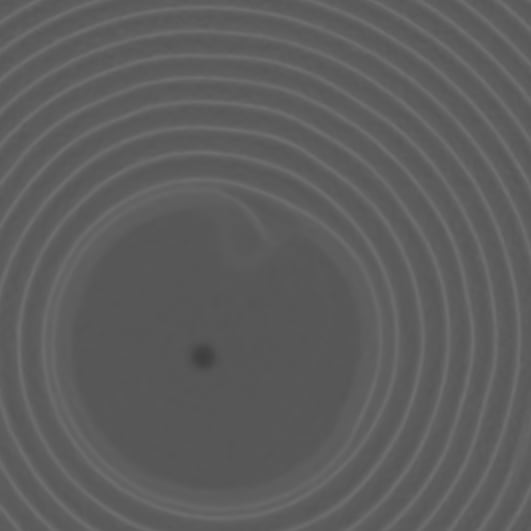
Per-projection geometry correction
For each projection, the geometric error (mechanical tolerances, focal spot drift,...) is automatically corrected during the reconstruction.
For each projection, the geometric error (mechanical tolerances, focal spot drift,...) is automatically corrected during the reconstruction.
Increased image sharpness
Because of sub-pixel alignment, the image sharpness is improved even for well calibrated lab-CT systems.
Because of sub-pixel alignment, the image sharpness is improved even for well calibrated lab-CT systems.
No ghosting artifacts
Ghosting artifacts disappear as the Voxray software corrects for geometric errors.
Ghosting artifacts disappear as the Voxray software corrects for geometric errors.
New possibilities with arbitrary trajectories
Laminography
Voxray supports all types of laminography reconstruction: Detector shifting, tilted rotation axis, and robotic laminography.
Voxray supports all types of laminography reconstruction: Detector shifting, tilted rotation axis, and robotic laminography.
Dual-arm robotic CT
Dual-arm robotic CT is supported by Voxray, enabling you to scan parts that could not be scanned before.
Dual-arm robotic CT is supported by Voxray, enabling you to scan parts that could not be scanned before.
No undersampling artifacts
The Voxray CT reconstruction does not suffer from undersampling artifacts and therefore supports arbitrary acquisition trajectories.
The Voxray CT reconstruction does not suffer from undersampling artifacts and therefore supports arbitrary acquisition trajectories.
Clean volumes from fast scans with Advanced denoising
Usable results from fast scans
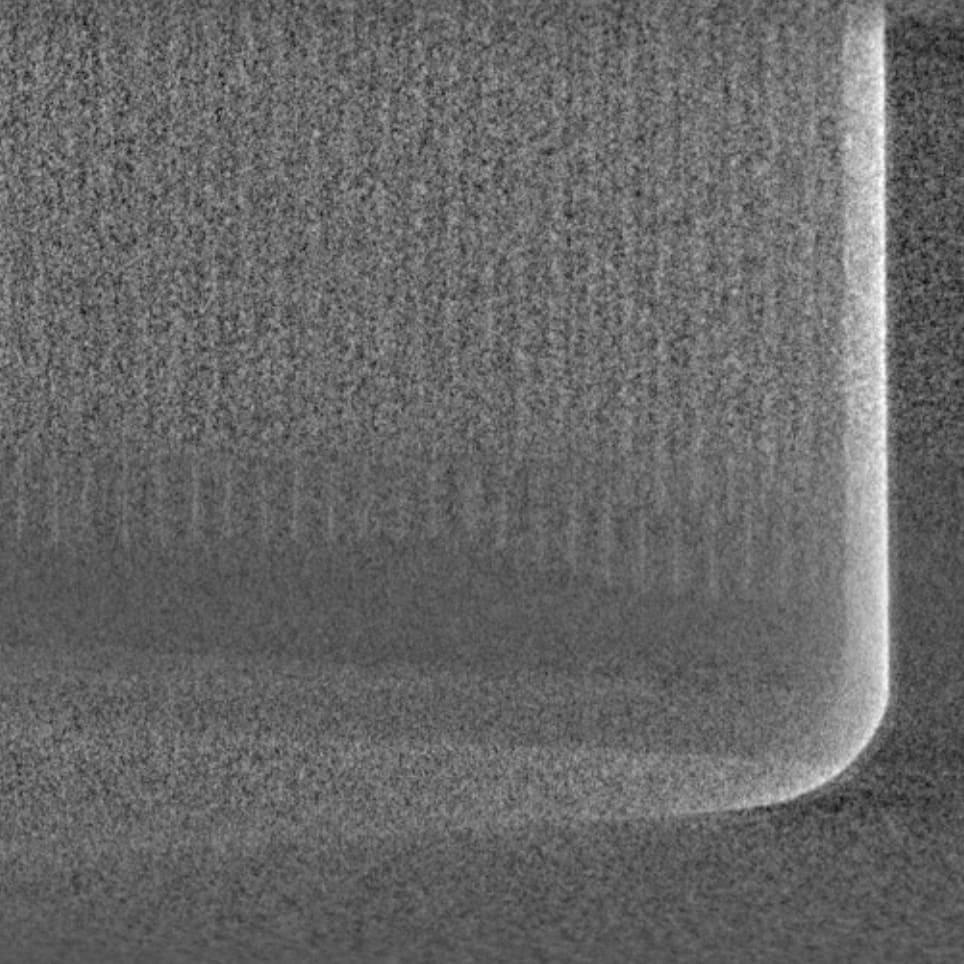
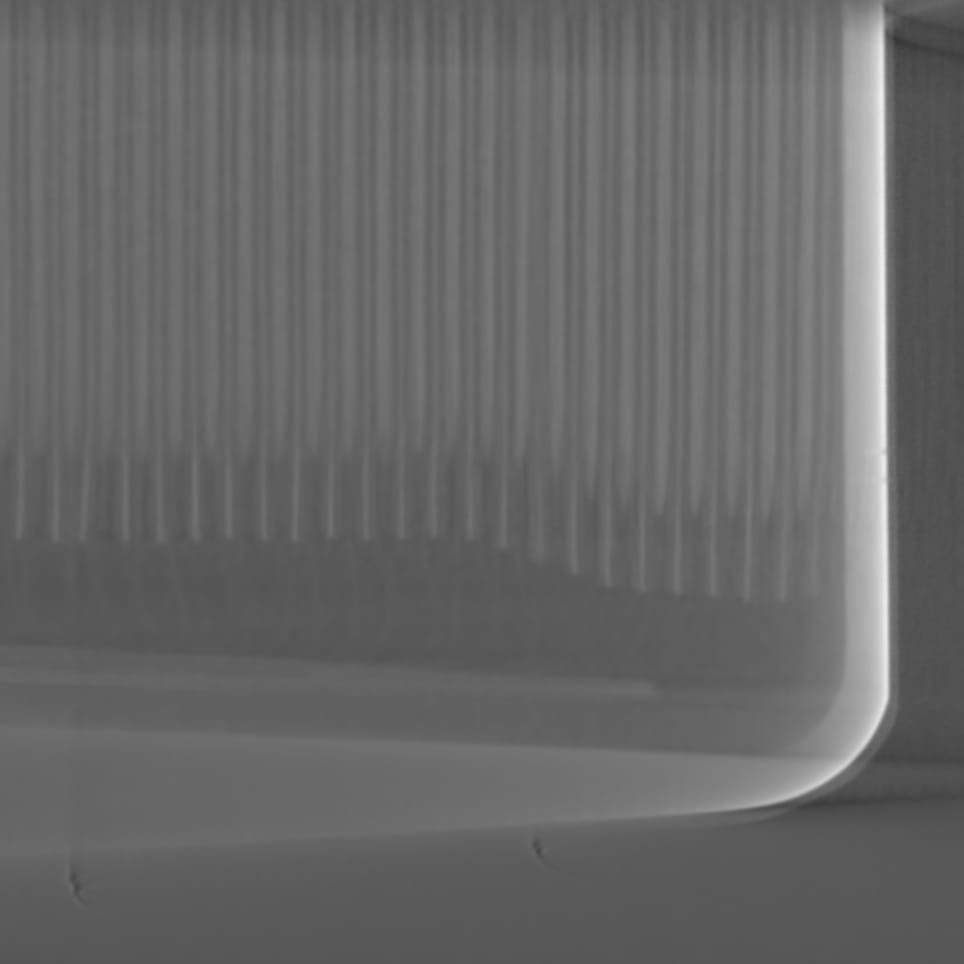
Even ultra-fast scans reconstruct into clean volumes.
Even ultra-fast scans reconstruct into clean volumes.
Works with FDK and QRT
Use it with FDK or QRT reconstruction, on flat panel and photon counting detectors. Included in the Neural reconstruction engine module.
Use it with FDK or QRT reconstruction, on flat panel and photon counting detectors. Included in the Neural reconstruction engine module.
Usable results from fast scans
Even ultra-fast scans reconstruct into clean volumes.
Even ultra-fast scans reconstruct into clean volumes.
Works with FDK and QRT
Use it with FDK or QRT reconstruction, on flat panel and photon counting detectors. Included in the Neural reconstruction engine module.
Use it with FDK or QRT reconstruction, on flat panel and photon counting detectors. Included in the Neural reconstruction engine module.
How physically based CT reconstruction works
Conventional reconstruction assumes an ideal scanner: a single X-ray energy, a perfectly calibrated geometry and a sample that does not move. Real scans break all three assumptions. The results are beam hardening, metal streaks, blur and ghosting, which hide defects and make measurements unreliable.
QRT instead models the physics of the measurement and computes the volume that best explains the recorded projections. It estimates geometry errors for every projection while it reconstructs. This keeps multi-material parts, laminography and robot CT scans clean.
| Filtered backprojection (FDK) | Conventional iterative | Voxray QRT | |
|---|---|---|---|
| Beam hardening and metal artifacts | Strong | Reduced | Almost none |
| Geometry errors (drift, tolerances) | Needs separate calibration | Needs separate calibration | Corrected for every projection |
| Scan trajectories | Only trajectories it was implemented for | Limited | Laminography, helix, robot CT |
| Sparse views (few projections) | Strong undersampling artifacts | Reduced artifacts | No undersampling artifacts |
| Noise in fast scans | Strong noise | Reduced with regularization | Removed with advanced denoising (optional module) |
| Parameter tuning | Little | A lot | Good results out of the box |
| Reconstruction time | Fastest | Slower | 32 min for 2,500 projections (2k detector, 1× RTX 4090) |
Beam hardening and metal artifacts
Voxray QRT
Filtered backprojection (FDK)
Conventional iterative
Geometry errors (drift, tolerances)
Voxray QRT
Filtered backprojection (FDK)
Conventional iterative
Scan trajectories
Voxray QRT
Filtered backprojection (FDK)
Conventional iterative
Sparse views (few projections)
Voxray QRT
Filtered backprojection (FDK)
Conventional iterative
Noise in fast scans
Voxray QRT
Filtered backprojection (FDK)
Conventional iterative
Parameter tuning
Voxray QRT
Filtered backprojection (FDK)
Conventional iterative
Reconstruction time
Voxray QRT
Filtered backprojection (FDK)
Conventional iterative
Everything QRT corrects
Most corrections run automatically during the reconstruction, so you get usable volumes without manual parameter tuning.
Beam hardening
Cupping and dark streaks between dense regions are almost nonexistent, so gray values stay consistent across the part.
How QRT corrects itMetal artifacts
Plastics, adhesives and composites next to metal pins, screws and inserts stay visible instead of disappearing under streaks.
How QRT corrects itRead the case studyGeometry errors
Mechanical tolerances, axis shifts and focal spot drift are corrected for every projection. Ghosting disappears and even well-calibrated systems get sharper.
Read the case studySample motion
Movement of the sample during the scan is corrected, which rescues scans of soft or loosely mounted samples.
Read the case studyUndersampling
QRT does not produce undersampling artifacts, so sparse and irregular scan trajectories reconstruct cleanly.
Read the case studyNoise
Advanced denoising removes the noise of fast scans, so they still give clean volumes. Part of the Neural reconstruction engine module.
How QRT corrects itReplaces only the reconstruction step
Keep your scanner, your scan settings and your analysis software. QRT reads the raw projections and writes volumes that open where you work today.
Your CT scanner
Raw projections straight from your scanner, with no manual export or conversion step
Voxray QRT
Physically based reconstruction on your own Windows workstation with an NVIDIA GPU. Your scan data stays on your infrastructure.
Hardware guideYour analysis software
VGI for VGSTUDIO MAX, DICOM for other tools, or Voxray Spectra for fast inspection
Reads the raw data of your CT scanner
QRT imports the projections of all major CT scanner manufacturers directly. If your format is missing, tell us and we will add it.
- Bruker
- Comet Yxlon
- Diondo
- Fraunhofer
- Heitec
- Neoscan
- Nikon
- Nordson
- Novadep
- NSI
- Pinnacle
- Procon
- Rigaku
- RX Solutions
- Techvalley
- Tescan
- Tesco
- Viscom
- Visiconsult
- Waygate Technologies (Phoenix)
- Werth
- Zeiss
QRT in practice
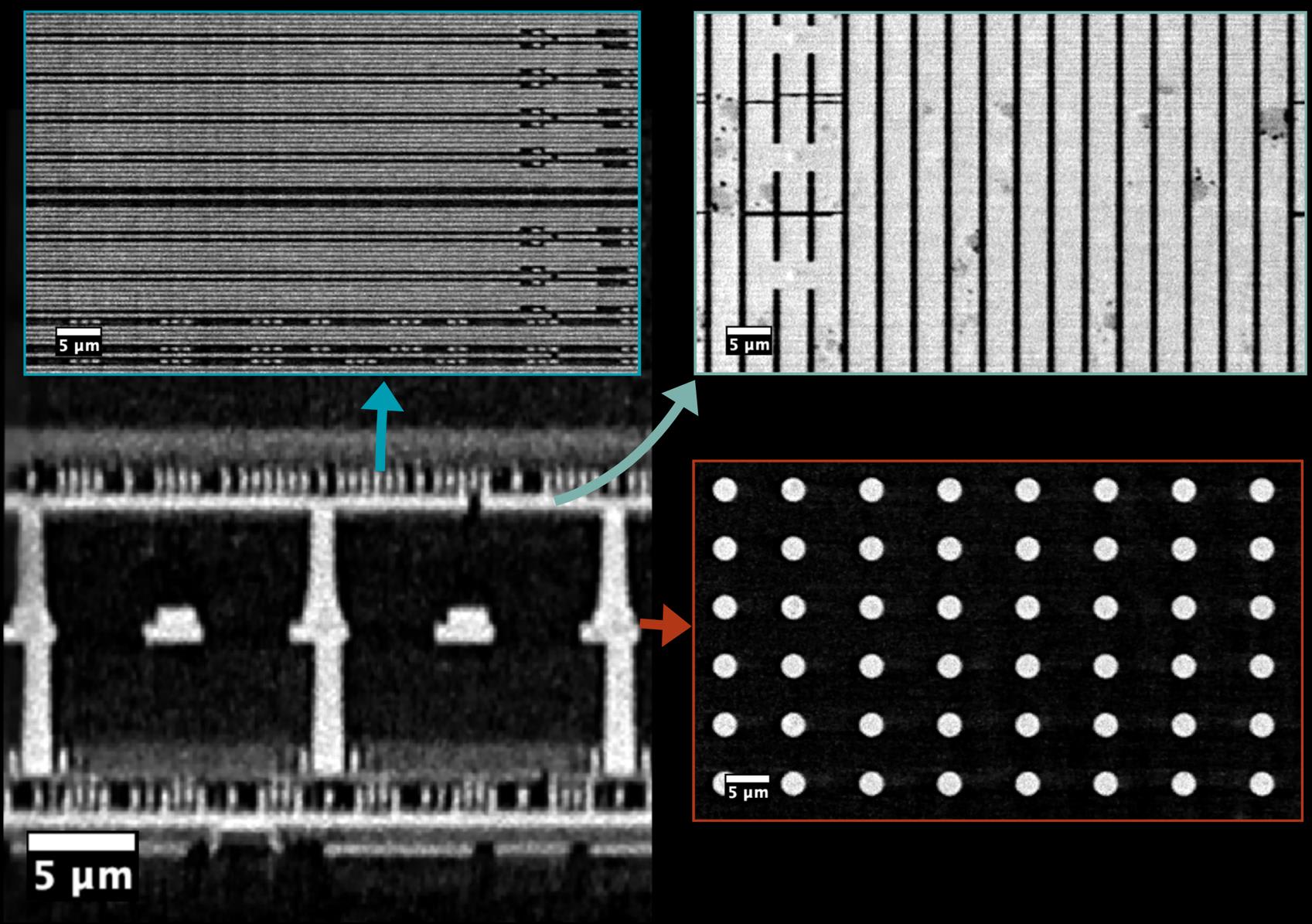
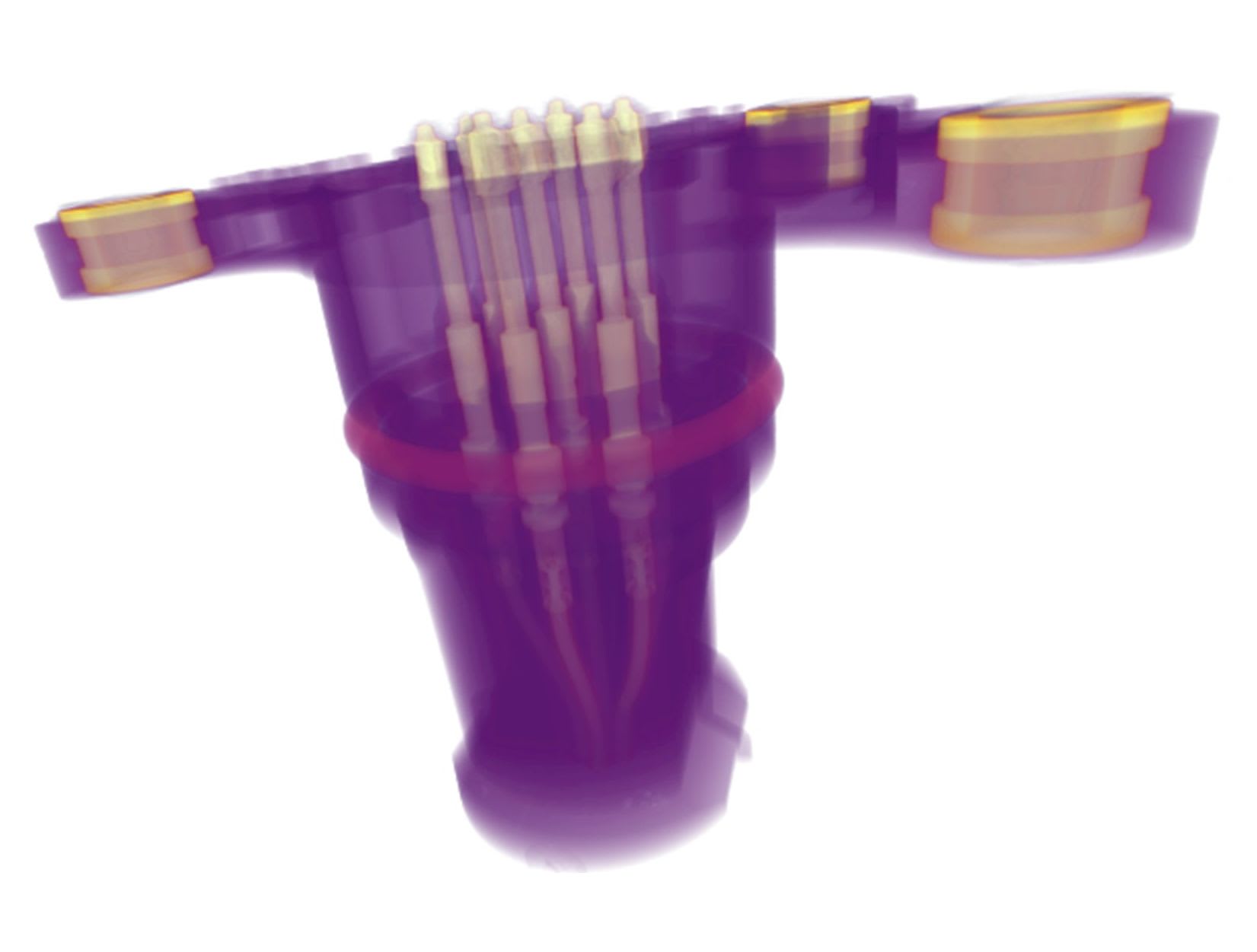
Case studies from semiconductor packaging, electronics, robot CT and life science.


Frequently asked questions
What is Voxray QRT?
QRT (Quantum Reconstruction Technique) is CT reconstruction software from Voxray. It turns the raw projections of an industrial CT scan into a 3D volume with a physically based model, which keeps beam hardening, metal artifacts and geometry errors to a minimum.
Which CT scanners does QRT support?
QRT reads the raw data of all major manufacturers, including Bruker, Comet Yxlon, Diondo, Nikon, Waygate Technologies and Zeiss. Custom-built scanners can use the open Voxray projection format. If your format is missing, we add it.
What hardware do I need?
A Windows 10 or 11 workstation with an NVIDIA GPU with at least 16 GB of VRAM, a CPU with AVX2 support and enough RAM for the projections and the volume. Our hardware guide lists recommended systems for 2k, 3k and 4k detectors.
How long does a reconstruction take?
In our benchmark, 2,500 projections from a 2k detector take 32 minutes on one RTX 4090 and 18 minutes on two. The time grows with detector size and projection count and drops with more GPUs.
How is QRT licensed?
QRT is sold as a perpetual license. The Multi-GPU and Robot CT modules are available as add-ons. Contact us for a quote.
Can I test QRT on my own scans?
Yes. Request a free trial and reconstruct your own datasets on your workstation, or choose the reconstruction service and send us a dataset to reconstruct for you.
How is QRT different from the software that came with my scanner?
Scanner software usually uses filtered backprojection (FDK), which assumes a single X-ray energy and a perfect geometry. QRT models the physics of the measurement instead, which keeps beam hardening and metal artifacts to a minimum and corrects geometry errors.
Can I keep using VGSTUDIO MAX for analysis?
Yes. QRT saves volumes as VGI, which VGSTUDIO MAX opens directly, or as DICOM. Your analysis workflow stays the same.
Reads raw data from 22 scanner brands
Runs on your own workstation
Perpetual license
Free trial on your own data