
What is iterative reconstruction in CT?
Iterative reconstruction computes a CT volume step by step: it simulates the projections of the current estimate, compares them with the measured ones and corrects the volume until both match. Model-based methods such as Voxray QRT also simulate the physics of the scan, so beam hardening and metal artifacts don't form in the first place.
How iterative reconstruction works
Most CT scanners reconstruct with filtered backprojection (FDK). It computes the volume in a single pass from the filtered projections and is fast, but it assumes ideal data: a single X-ray energy, an exact geometry, a circular trajectory and enough projections without noise.
Iterative reconstruction treats the reconstruction as an optimization problem instead. It starts from an estimate of the volume, simulates the projections that this volume would produce, compares them with the measured projections and updates the volume to reduce the difference. After several such iterations, the volume explains the measured data as well as possible.
Because the simulation step can model the measurement in as much detail as needed, iterative methods can account for things FDK has to ignore: the noise of each detector pixel, the X-ray spectrum, the actual position of source and detector, and prior knowledge about the part.
Where iterative reconstruction helps
Few projections or limited angles, for shorter scans or when the part can't be scanned from all sides.
Noisy data from short exposures, dense materials or small voxels.
Multi-material parts with beam hardening and metal artifacts, when the method models the X-ray spectrum.
Non-circular trajectories such as helix, laminography and robotic CT, and scans with geometry errors.
Conventional iterative reconstruction and QRT compared
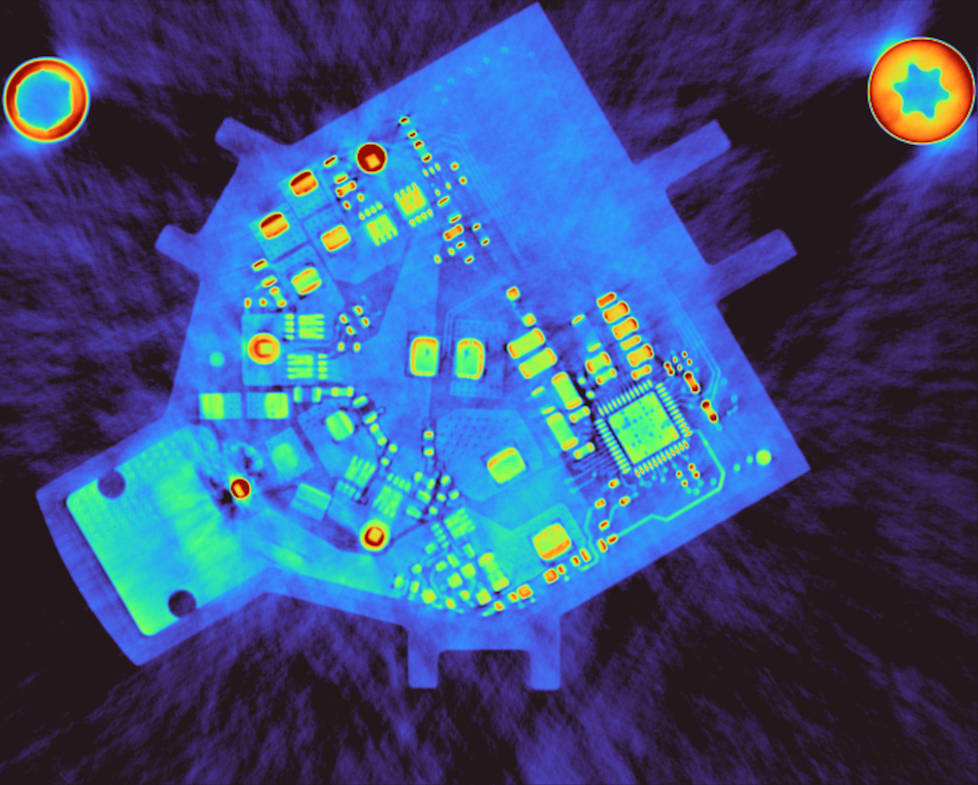
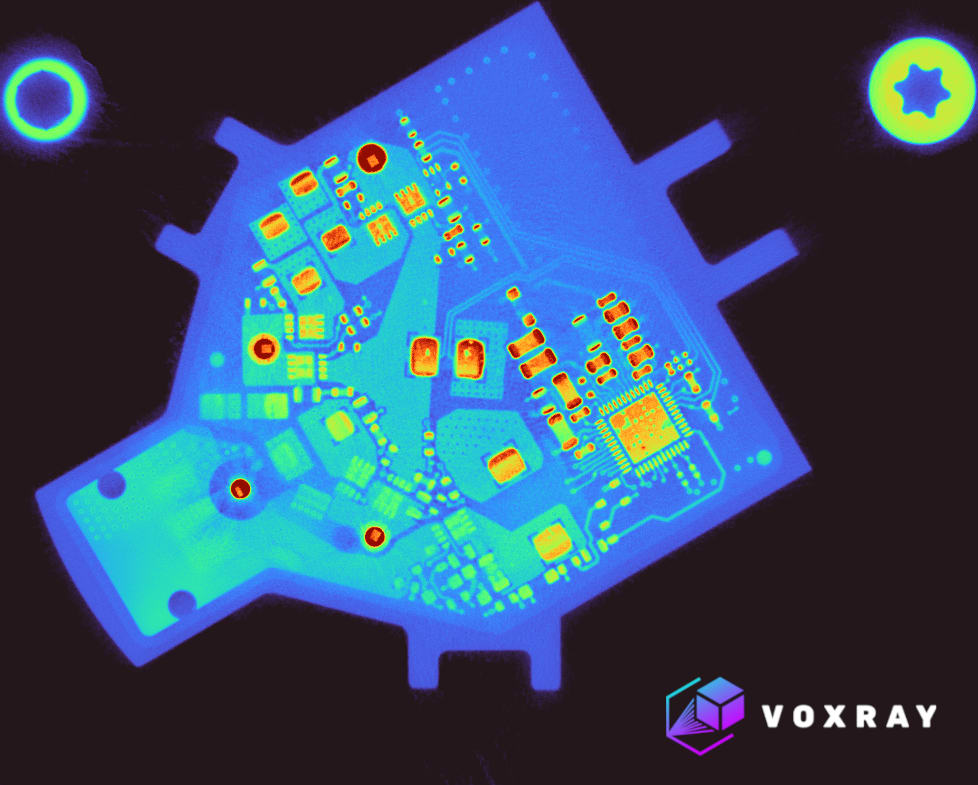
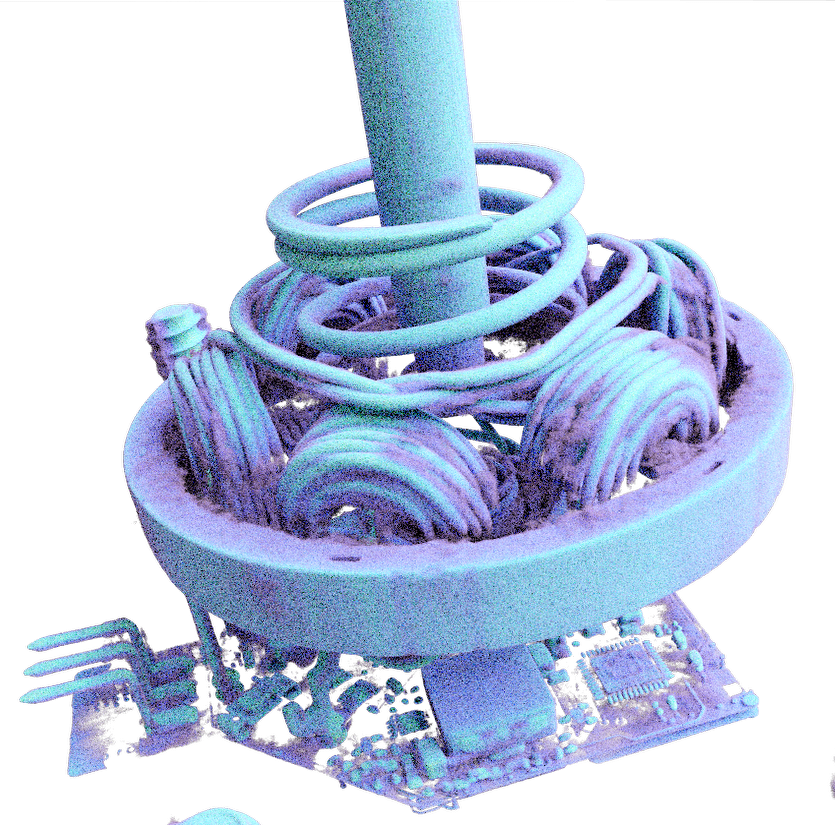
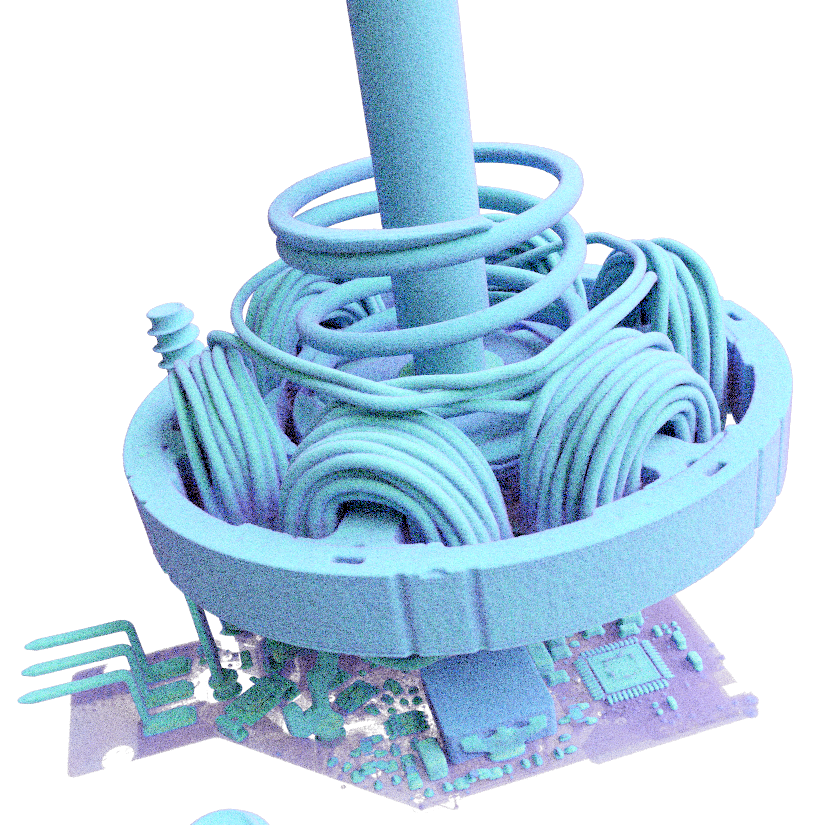
Two views of an oil separator scan. Drag the slider to compare.
Families of iterative reconstruction
The methods differ in what their simulation of the measurement includes. The more it models, the more artifacts it can avoid.
Algebraic methods (ART, SART, SIRT)
How it works: Repeatedly correct the volume so that its projections match the measured ones, ray by ray or for all rays at once.
Limits: Use the same simplified physics as FDK, so beam hardening stays. Noise grows with more iterations, so the result depends on when to stop.
Statistical methods
How it works: Model the photon statistics of the detector and give noisy rays, for example through dense material, less weight.
Limits: Reduce noise, but usually still assume a single X-ray energy. The strength of the noise model has to be tuned.
Regularized methods (TV, compressed sensing)
How it works: Add prior knowledge, for example that the part consists of regions of constant density. This allows reconstructions from few projections.
Limits: Too strong a regularization removes fine detail and turns gradual transitions into flat, blocky patches.
Model-based methods
How it works: Simulate the physics of the scan: the polychromatic spectrum, the detector and the exact geometry. Artifacts from these effects don't form in the first place.
Limits: Need much more computation per iteration and an accurate model of the scanner. Without GPUs, they are too slow for daily use.
How Voxray QRT uses iterative reconstruction
QRT is a physically based, model-based iterative reconstruction for industrial CT. It models the polychromatic X-ray spectrum and the physics of the measurement, and computes the volume that best explains the recorded projections.
While it reconstructs, QRT also estimates the geometry errors of every projection, so it handles robotic CT, laminography and other trajectories with the same algorithm. It runs on NVIDIA GPUs and gives good results out of the box, without tuning parameters for each dataset.
Physical model
Beam hardening and metal artifacts are avoided instead of corrected afterwards.
Geometry correction
Mechanical tolerances, axis shifts and focal spot drift are corrected for every projection.
Any trajectory
Circular, helix, laminography and robotic CT, from the raw data of your scanner.
GPU speed
2,500 projections from a 2k detector take 32 minutes on one RTX 4090 and 18 minutes on two.
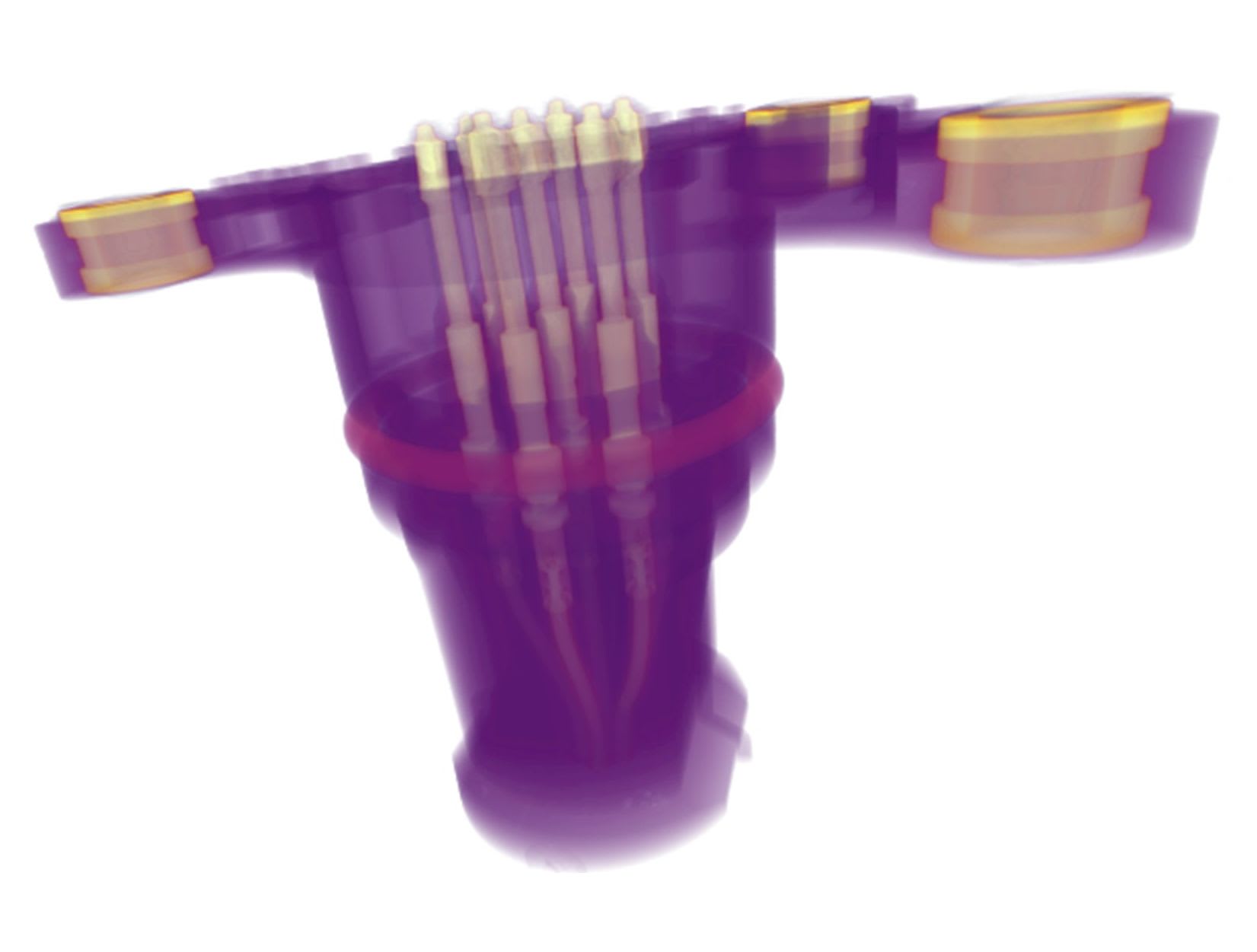
Case study
Defect detection in a 7-pin power connector
With Robert Bosch GmbH Corporate Research, we compared filtered backprojection, dual-energy fusion and QRT on a connector with copper alloy pins in a plastic housing, validated against a polished cross-section. Voids between the pins were hidden in filtered backprojection, partially visible with dual energy and clearly resolved with QRT.
Read the case study
Frequently asked questions about iterative reconstruction
What is iterative reconstruction in CT?
A way to compute the CT volume by repeatedly simulating the projections of the current estimate, comparing them with the measured projections and correcting the volume, until the simulated and measured data match.
What is the difference between filtered backprojection and iterative reconstruction?
Filtered backprojection (FDK) computes the volume in one pass and assumes ideal data. Iterative reconstruction needs several passes, but it can model noise, the X-ray spectrum and the actual scan geometry, which reduces artifacts and works with fewer projections and any trajectory.
Is iterative reconstruction slower than FDK?
Yes, each iteration simulates and compares all projections. On GPUs it is fast enough for daily use: in our benchmark, QRT reconstructs 2,500 projections from a 2k detector in 32 minutes on one RTX 4090.
Can iterative reconstruction create artifacts of its own?
Yes. Too many iterations of simple algebraic methods amplify noise, and too strong a regularization makes surfaces look blocky and removes fine detail. Model-based methods reduce the need for such tuning, because they explain the data with physics instead of smoothing it.
Is iterative reconstruction in industrial CT the same as in medical CT?
The principle is the same. In medical CT, iterative reconstruction mainly lowers the radiation dose. In industrial CT, the goals are fewer artifacts in multi-material parts, reliable measurements, shorter scans and non-circular trajectories.
Can I test QRT on my own scans?
Yes. Request a free trial and reconstruct your own datasets on your workstation, or choose the reconstruction service and send us a dataset to reconstruct for you.
Related topics
Try iterative reconstruction on your own scans
Reconstruct your own data with QRT in a free trial, or talk to us about your parts and your scanner.